Buy multichannel.eu ?
We are moving the project
multichannel.eu .
Are you interested in purchasing the domain
multichannel.eu ?
domain@kv-gmbh.de · 0541-91531010
Buy multichannel.eu ?
What is the interaction effect in a mixed ANOVA?
The interaction effect in a mixed ANOVA refers to the combined effect of two or more independent variables on the dependent variable. It indicates whether the effect of one independent variable on the dependent variable is influenced by the levels of another independent variable. In other words, it shows whether the effect of one factor depends on the level of another factor. The presence of an interaction effect suggests that the relationship between the independent variables and the dependent variable is not simply additive. **
How to conduct an alpha correction in an ANOVA with Bonferroni post-hoc test?
To conduct an alpha correction in an ANOVA with Bonferroni post-hoc test, you first need to determine the overall significance level you want to use for the entire family of comparisons. Divide this significance level (usually 0.05) by the number of planned comparisons to get the adjusted alpha level for each individual comparison. Then, compare the p-values from the post-hoc tests to the adjusted alpha level to determine statistical significance. This correction helps reduce the likelihood of making a Type I error when conducting multiple comparisons. **
Similar search terms for ANOVA
Top-Angebote
Products related to ANOVA:
-
DEVERA Hanger and Full-length Mirror IntegrationSpecification Main Material: Rubber Wood,Solid Wood,Wood+Glass Product Style: American Design,Art Deco,Artsy,Contemporary,European Product Features Product Information: Full-length mirror, solid wood + rubber wood + glass, 65.7*17.7in (mirror width:…302,39 $*Shipping: 0,00 $Secure redirect to the provider
-
Uplift Essentials Triple Safety AirTag Integration Collar pinkKeep your pet protected with the ultimate hightech security accessory: the TripleSafety AirTag Integration Collar. This isn't just a stylish neckband; its a comprehensive tracking and identification system designed to give you total peace of mind....56,97 $*Shipping: 0,00 $Secure redirect to the provider
-
DEVERA Hanger and Full-length Mirror IntegrationSpecification Main Material: Rubber Wood,Solid Wood,Wood+Glass Product Style: American Design,Artsy,Beach,Contemporary,European Product Features Product Information: Full-length mirror, solid wood + rubber wood + glass, 68.8*19.6in (mirror width:...356,99 $*Shipping: 0,00 $Secure redirect to the provider
-
DEVERA Hanger and Full-length Mirror IntegrationSpecification Main Material: Rubber Wood,Solid Wood,Wood+Glass Product Style: American Design,Artsy,Beach,Contemporary,European Product Features Product Information: Full-length mirror, solid wood + rubber wood + glass, 68.8*19.6in (mirror width:...349,99 $*Shipping: 0,00 $Secure redirect to the provider




-
How to perform an alpha correction in an ANOVA with Bonferroni post-hoc test?
To perform an alpha correction in an ANOVA with Bonferroni post-hoc test, you first need to determine the desired alpha level for the overall analysis. Then, divide this alpha level by the number of planned comparisons in the post-hoc test (e.g., number of groups being compared). This adjusted alpha level will be used to determine statistical significance for each individual comparison. By using the Bonferroni correction, you reduce the likelihood of making a Type I error when conducting multiple comparisons. **
-
Is the Levene test for homogeneity of variances the same as one-way ANOVA?
No, the Levene test for homogeneity of variances is a separate statistical test used to assess whether the variances of the groups being compared in an ANOVA are equal. On the other hand, one-way ANOVA is a hypothesis test used to determine whether there are statistically significant differences between the means of three or more independent groups. The Levene test is often conducted before performing an ANOVA to ensure that the assumption of homogeneity of variances is met. **
-
Is the Levene test for homogeneity of variances the same as the one-way ANOVA?
No, the Levene test for homogeneity of variances is a separate statistical test from the one-way ANOVA. The Levene test is used to determine if the variances of the groups being compared in an ANOVA are equal. It tests the null hypothesis that the variances are equal across all groups. On the other hand, the one-way ANOVA is used to test the null hypothesis that the means of the groups are equal. While both tests are related to comparing groups, they are testing different aspects of the data. **
-
What do I need to calculate if my two-way repeated measures ANOVA is not normally distributed?
If your two-way repeated measures ANOVA is not normally distributed, you may need to calculate a non-parametric alternative test, such as the Friedman test. This test does not assume normality and is appropriate for analyzing repeated measures data when the assumptions of ANOVA are not met. Additionally, you may need to consider transforming your data or using robust statistical methods to account for the violation of normality assumption. It is important to assess the impact of the non-normality on your results and interpret them accordingly. **


What to do when the residuals are not normally distributed in a two-way ANOVA without repeated measures with small groups of 17 and 26 participants?
When the residuals are not normally distributed in a two-way ANOVA without repeated measures with small groups of 17 and 26 participants, you can consider transforming the data to achieve normality. This can be done using methods such as logarithmic, square root, or inverse transformations. Additionally, you can also consider using non-parametric tests, such as the Kruskal-Wallis test, which do not assume normality of the residuals. It is important to carefully consider the assumptions of the ANOVA and the potential impact of non-normality on the results before deciding on the appropriate course of action. **
If I conduct an ANCOVA instead of a 2x3 ANOVA and include one of the factors as a covariate, will the factor itself be removed from the analysis plan?
No, including one of the factors as a covariate in an ANCOVA instead of a 2x3 ANOVA does not remove the factor itself from the analysis plan. The factor will still be included in the analysis, but the covariate will be used to adjust for its effects. ANCOVA allows for controlling the influence of continuous variables on the dependent variable, while still examining the main effects and interactions of the factors in the analysis. **
Top-Angebote
Products related to ANOVA:
-
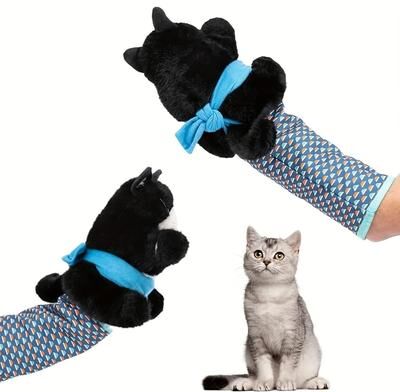
Uplifted Finds Predatory Engagement Wrestling Puppet Hub Predatory Engagement Wrestling Puppet HubTransform interactive play with the PredatoryEngagement Puppet, a professionalgrade interaction module engineered with manualsimulation logic. This highutility tool features a reinforced plush architecture and poseable limbs, specifically designed...85,97 $*Shipping: 0,00 $Secure redirect to the provider
-
DEVERA Hanger and Full-length Mirror IntegrationSpecification Main Material: Rubber Wood,Solid Wood,Wood+Glass Product Style: American Design,Art Deco,Artsy,Contemporary,European Product Features Product Information: Full-length mirror, solid wood + rubber wood + glass, 65.7*17.7in (mirror width:…302,39 $*Shipping: 0,00 $Secure redirect to the provider
-
Uplift Essentials Triple Safety AirTag Integration Collar pinkKeep your pet protected with the ultimate hightech security accessory: the TripleSafety AirTag Integration Collar. This isn't just a stylish neckband; its a comprehensive tracking and identification system designed to give you total peace of mind....56,97 $*Shipping: 0,00 $Secure redirect to the provider
-
What is the interaction effect in a mixed ANOVA?
The interaction effect in a mixed ANOVA refers to the combined effect of two or more independent variables on the dependent variable. It indicates whether the effect of one independent variable on the dependent variable is influenced by the levels of another independent variable. In other words, it shows whether the effect of one factor depends on the level of another factor. The presence of an interaction effect suggests that the relationship between the independent variables and the dependent variable is not simply additive. **
-
How to conduct an alpha correction in an ANOVA with Bonferroni post-hoc test?
To conduct an alpha correction in an ANOVA with Bonferroni post-hoc test, you first need to determine the overall significance level you want to use for the entire family of comparisons. Divide this significance level (usually 0.05) by the number of planned comparisons to get the adjusted alpha level for each individual comparison. Then, compare the p-values from the post-hoc tests to the adjusted alpha level to determine statistical significance. This correction helps reduce the likelihood of making a Type I error when conducting multiple comparisons. **
-
How to perform an alpha correction in an ANOVA with Bonferroni post-hoc test?
To perform an alpha correction in an ANOVA with Bonferroni post-hoc test, you first need to determine the desired alpha level for the overall analysis. Then, divide this alpha level by the number of planned comparisons in the post-hoc test (e.g., number of groups being compared). This adjusted alpha level will be used to determine statistical significance for each individual comparison. By using the Bonferroni correction, you reduce the likelihood of making a Type I error when conducting multiple comparisons. **
-
Is the Levene test for homogeneity of variances the same as one-way ANOVA?
No, the Levene test for homogeneity of variances is a separate statistical test used to assess whether the variances of the groups being compared in an ANOVA are equal. On the other hand, one-way ANOVA is a hypothesis test used to determine whether there are statistically significant differences between the means of three or more independent groups. The Levene test is often conducted before performing an ANOVA to ensure that the assumption of homogeneity of variances is met. **
Similar search terms for ANOVA
-
DEVERA Hanger and Full-length Mirror IntegrationSpecification Main Material: Rubber Wood,Solid Wood,Wood+Glass Product Style: American Design,Artsy,Beach,Contemporary,European Product Features Product Information: Full-length mirror, solid wood + rubber wood + glass, 68.8*19.6in (mirror width:...356,99 $*Shipping: 0,00 $Secure redirect to the provider
-
DEVERA Hanger and Full-length Mirror IntegrationSpecification Main Material: Rubber Wood,Solid Wood,Wood+Glass Product Style: American Design,Artsy,Beach,Contemporary,European Product Features Product Information: Full-length mirror, solid wood + rubber wood + glass, 68.8*19.6in (mirror width:...349,99 $*Shipping: 0,00 $Secure redirect to the provider
-
Uplift Essentials Triple Safety AirTag Integration Collar redKeep your pet protected with the ultimate hightech security accessory: the TripleSafety AirTag Integration Collar. This isn't just a stylish neckband; its a comprehensive tracking and identification system designed to give you total peace of mind....56,97 $*Shipping: 0,00 $Secure redirect to the provider
-
Uplift Essentials Triple Safety AirTag Integration Collar purpleKeep your pet protected with the ultimate hightech security accessory: the TripleSafety AirTag Integration Collar. This isn't just a stylish neckband; its a comprehensive tracking and identification system designed to give you total peace of mind....56,97 $*Shipping: 0,00 $Secure redirect to the provider
-
Is the Levene test for homogeneity of variances the same as the one-way ANOVA?
No, the Levene test for homogeneity of variances is a separate statistical test from the one-way ANOVA. The Levene test is used to determine if the variances of the groups being compared in an ANOVA are equal. It tests the null hypothesis that the variances are equal across all groups. On the other hand, the one-way ANOVA is used to test the null hypothesis that the means of the groups are equal. While both tests are related to comparing groups, they are testing different aspects of the data. **
-
What do I need to calculate if my two-way repeated measures ANOVA is not normally distributed?
If your two-way repeated measures ANOVA is not normally distributed, you may need to calculate a non-parametric alternative test, such as the Friedman test. This test does not assume normality and is appropriate for analyzing repeated measures data when the assumptions of ANOVA are not met. Additionally, you may need to consider transforming your data or using robust statistical methods to account for the violation of normality assumption. It is important to assess the impact of the non-normality on your results and interpret them accordingly. **
-
What to do when the residuals are not normally distributed in a two-way ANOVA without repeated measures with small groups of 17 and 26 participants?
When the residuals are not normally distributed in a two-way ANOVA without repeated measures with small groups of 17 and 26 participants, you can consider transforming the data to achieve normality. This can be done using methods such as logarithmic, square root, or inverse transformations. Additionally, you can also consider using non-parametric tests, such as the Kruskal-Wallis test, which do not assume normality of the residuals. It is important to carefully consider the assumptions of the ANOVA and the potential impact of non-normality on the results before deciding on the appropriate course of action. **
-
If I conduct an ANCOVA instead of a 2x3 ANOVA and include one of the factors as a covariate, will the factor itself be removed from the analysis plan?
No, including one of the factors as a covariate in an ANCOVA instead of a 2x3 ANOVA does not remove the factor itself from the analysis plan. The factor will still be included in the analysis, but the covariate will be used to adjust for its effects. ANCOVA allows for controlling the influence of continuous variables on the dependent variable, while still examining the main effects and interactions of the factors in the analysis. **
* All prices are inclusive of VAT and, if applicable, plus shipping costs. The offer information is based on the details provided by the respective shop and is updated through automated processes. Real-time updates do not occur, so deviations can occur in individual cases. ** Note: Parts of this content were created by AI.