Buy multichannel.eu ?
We are moving the project
multichannel.eu .
Are you interested in purchasing the domain
multichannel.eu ?
domain@kv-gmbh.de · 0541-91531010
Buy multichannel.eu ?
How can one determine the functional equation of a function through integration?
To determine the functional equation of a function through integration, one can start by integrating the function with respect to the variable. By performing the integration, one can identify any patterns or relationships between the original function and its integral. This can help in deriving a functional equation that relates the original function to its integral. Additionally, analyzing the behavior of the function under integration can provide insights into the properties and characteristics of the function, which can further aid in determining its functional equation. **
What is the mesh equation and the node equation?
The mesh equation is a fundamental equation used in circuit analysis to calculate the current flowing in a loop of a circuit. It is based on Kirchhoff's voltage law and states that the sum of the voltage drops around a closed loop in a circuit is equal to the product of the current flowing in the loop and the total resistance of the loop. The node equation, on the other hand, is used to calculate the voltage at a specific node in a circuit. It is based on Kirchhoff's current law and states that the sum of currents entering a node is equal to the sum of currents leaving the node. This equation is used to solve for the voltage at a particular node in a circuit. **


Similar search terms for Equation
Top-Angebote
Products related to Equation:
-
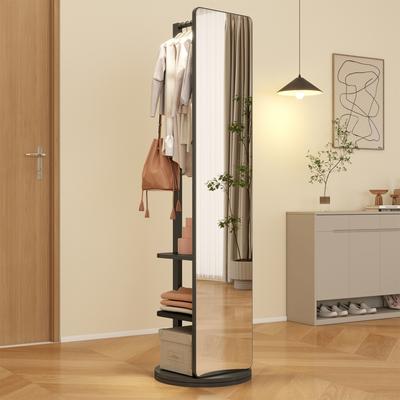
DEVERA Hanger and Full-length Mirror IntegrationSpecification Main Material: Rubber Wood,Solid Wood,Wood+Glass Product Style: American Design,Art Deco,Artsy,Contemporary,European Product Features Product Information: Full-length mirror, solid wood + rubber wood + glass, 65.7*17.7in (mirror width:…302,39 $*Shipping: 0,00 $Secure redirect to the provider
-
Uplift Essentials Triple Safety AirTag Integration Collar pinkKeep your pet protected with the ultimate hightech security accessory: the TripleSafety AirTag Integration Collar. This isn't just a stylish neckband; its a comprehensive tracking and identification system designed to give you total peace of mind....56,97 $*Shipping: 0,00 $Secure redirect to the provider
-
DEVERA Hanger and Full-length Mirror IntegrationSpecification Main Material: Rubber Wood,Solid Wood,Wood+Glass Product Style: American Design,Artsy,Beach,Contemporary,European Product Features Product Information: Full-length mirror, solid wood + rubber wood + glass, 68.8*19.6in (mirror width:...356,99 $*Shipping: 0,00 $Secure redirect to the provider
-
DEVERA Hanger and Full-length Mirror IntegrationSpecification Main Material: Rubber Wood,Solid Wood,Wood+Glass Product Style: American Design,Artsy,Beach,Contemporary,European Product Features Product Information: Full-length mirror, solid wood + rubber wood + glass, 68.8*19.6in (mirror width:...349,99 $*Shipping: 0,00 $Secure redirect to the provider



-
'Equation and what?'
Equation and inequality are two fundamental concepts in mathematics. An equation is a statement that two expressions are equal, while an inequality is a statement that two expressions are not equal. Equations are used to find the value of a variable that makes the equation true, while inequalities are used to compare two quantities. Both equations and inequalities are essential tools in solving mathematical problems and modeling real-world situations. **
-
Is a linear equation the same as a parameter equation?
No, a linear equation and a parameter equation are not the same. A linear equation is an equation of the form y = mx + b, where m and b are constants and x and y are variables. A parameter equation, on the other hand, is an equation that contains parameters, which are variables that represent certain values in the equation. Parameter equations can be linear or non-linear, but the presence of parameters distinguishes them from regular linear equations. **
-
How can one reduce this equation to a quadratic equation?
To reduce an equation to a quadratic equation, one can use the method of substitution. By substituting a variable for a certain expression in the equation, one can transform the equation into a quadratic form. Another method is completing the square, which involves rearranging the equation to isolate the quadratic term and then adding or subtracting a constant to complete the square. Additionally, one can use the quadratic formula to solve for the roots of the equation, which can help in reducing the equation to a quadratic form. **
-
How can a coordinate equation be converted into a normal equation?
A coordinate equation can be converted into a normal equation by rearranging the terms to isolate the dependent variable on one side of the equation. This involves performing algebraic operations such as addition, subtraction, multiplication, and division to simplify the equation. Once the dependent variable is isolated, the equation is in normal form and can be used to solve for the variable in terms of the independent variables. This process allows for a clearer understanding of the relationship between the variables and makes it easier to analyze and interpret the equation. **


How can one convert a coordinate equation into a normal equation?
To convert a coordinate equation into a normal equation, you can start by rearranging the equation to isolate the dependent variable on one side. Then, you can simplify the equation by combining like terms and performing any necessary operations. Finally, you can rewrite the equation in standard form, which typically involves expressing the equation in terms of y = mx + b, where m is the slope and b is the y-intercept. **
What is the second-order difference equation for an inhomogeneous equation?
The second-order difference equation for an inhomogeneous equation is of the form \(y[n] - a_1y[n-1] - a_2y[n-2] = x[n]\), where \(y[n]\) represents the output sequence, \(x[n]\) represents the input sequence, and \(a_1\) and \(a_2\) are constants. This equation describes how the current output value \(y[n]\) is related to the previous two output values \(y[n-1]\) and \(y[n-2]\), as well as the current input value \(x[n]\). The inhomogeneous term \(x[n]\) represents any external influences or disturbances acting on the system. **
Top-Angebote
Products related to Equation:
-
Uplifted Finds Predatory Engagement Wrestling Puppet Hub Predatory Engagement Wrestling Puppet HubTransform interactive play with the PredatoryEngagement Puppet, a professionalgrade interaction module engineered with manualsimulation logic. This highutility tool features a reinforced plush architecture and poseable limbs, specifically designed...85,97 $*Shipping: 0,00 $Secure redirect to the provider
-
DEVERA Hanger and Full-length Mirror IntegrationSpecification Main Material: Rubber Wood,Solid Wood,Wood+Glass Product Style: American Design,Art Deco,Artsy,Contemporary,European Product Features Product Information: Full-length mirror, solid wood + rubber wood + glass, 65.7*17.7in (mirror width:…302,39 $*Shipping: 0,00 $Secure redirect to the provider
-
Uplift Essentials Triple Safety AirTag Integration Collar pinkKeep your pet protected with the ultimate hightech security accessory: the TripleSafety AirTag Integration Collar. This isn't just a stylish neckband; its a comprehensive tracking and identification system designed to give you total peace of mind....56,97 $*Shipping: 0,00 $Secure redirect to the provider
-
How can one determine the functional equation of a function through integration?
To determine the functional equation of a function through integration, one can start by integrating the function with respect to the variable. By performing the integration, one can identify any patterns or relationships between the original function and its integral. This can help in deriving a functional equation that relates the original function to its integral. Additionally, analyzing the behavior of the function under integration can provide insights into the properties and characteristics of the function, which can further aid in determining its functional equation. **
-
What is the mesh equation and the node equation?
The mesh equation is a fundamental equation used in circuit analysis to calculate the current flowing in a loop of a circuit. It is based on Kirchhoff's voltage law and states that the sum of the voltage drops around a closed loop in a circuit is equal to the product of the current flowing in the loop and the total resistance of the loop. The node equation, on the other hand, is used to calculate the voltage at a specific node in a circuit. It is based on Kirchhoff's current law and states that the sum of currents entering a node is equal to the sum of currents leaving the node. This equation is used to solve for the voltage at a particular node in a circuit. **
-
'Equation and what?'
Equation and inequality are two fundamental concepts in mathematics. An equation is a statement that two expressions are equal, while an inequality is a statement that two expressions are not equal. Equations are used to find the value of a variable that makes the equation true, while inequalities are used to compare two quantities. Both equations and inequalities are essential tools in solving mathematical problems and modeling real-world situations. **
-
Is a linear equation the same as a parameter equation?
No, a linear equation and a parameter equation are not the same. A linear equation is an equation of the form y = mx + b, where m and b are constants and x and y are variables. A parameter equation, on the other hand, is an equation that contains parameters, which are variables that represent certain values in the equation. Parameter equations can be linear or non-linear, but the presence of parameters distinguishes them from regular linear equations. **
Similar search terms for Equation
-
DEVERA Hanger and Full-length Mirror IntegrationSpecification Main Material: Rubber Wood,Solid Wood,Wood+Glass Product Style: American Design,Artsy,Beach,Contemporary,European Product Features Product Information: Full-length mirror, solid wood + rubber wood + glass, 68.8*19.6in (mirror width:...356,99 $*Shipping: 0,00 $Secure redirect to the provider
-
DEVERA Hanger and Full-length Mirror IntegrationSpecification Main Material: Rubber Wood,Solid Wood,Wood+Glass Product Style: American Design,Artsy,Beach,Contemporary,European Product Features Product Information: Full-length mirror, solid wood + rubber wood + glass, 68.8*19.6in (mirror width:...349,99 $*Shipping: 0,00 $Secure redirect to the provider
-
Uplift Essentials Triple Safety AirTag Integration Collar blackKeep your pet protected with the ultimate hightech security accessory: the TripleSafety AirTag Integration Collar. This isn't just a stylish neckband; its a comprehensive tracking and identification system designed to give you total peace of mind....56,97 $*Shipping: 0,00 $Secure redirect to the provider
-
Uplift Essentials Triple Safety AirTag Integration Collar purpleKeep your pet protected with the ultimate hightech security accessory: the TripleSafety AirTag Integration Collar. This isn't just a stylish neckband; its a comprehensive tracking and identification system designed to give you total peace of mind....56,97 $*Shipping: 0,00 $Secure redirect to the provider
-
How can one reduce this equation to a quadratic equation?
To reduce an equation to a quadratic equation, one can use the method of substitution. By substituting a variable for a certain expression in the equation, one can transform the equation into a quadratic form. Another method is completing the square, which involves rearranging the equation to isolate the quadratic term and then adding or subtracting a constant to complete the square. Additionally, one can use the quadratic formula to solve for the roots of the equation, which can help in reducing the equation to a quadratic form. **
-
How can a coordinate equation be converted into a normal equation?
A coordinate equation can be converted into a normal equation by rearranging the terms to isolate the dependent variable on one side of the equation. This involves performing algebraic operations such as addition, subtraction, multiplication, and division to simplify the equation. Once the dependent variable is isolated, the equation is in normal form and can be used to solve for the variable in terms of the independent variables. This process allows for a clearer understanding of the relationship between the variables and makes it easier to analyze and interpret the equation. **
-
How can one convert a coordinate equation into a normal equation?
To convert a coordinate equation into a normal equation, you can start by rearranging the equation to isolate the dependent variable on one side. Then, you can simplify the equation by combining like terms and performing any necessary operations. Finally, you can rewrite the equation in standard form, which typically involves expressing the equation in terms of y = mx + b, where m is the slope and b is the y-intercept. **
-
What is the second-order difference equation for an inhomogeneous equation?
The second-order difference equation for an inhomogeneous equation is of the form \(y[n] - a_1y[n-1] - a_2y[n-2] = x[n]\), where \(y[n]\) represents the output sequence, \(x[n]\) represents the input sequence, and \(a_1\) and \(a_2\) are constants. This equation describes how the current output value \(y[n]\) is related to the previous two output values \(y[n-1]\) and \(y[n-2]\), as well as the current input value \(x[n]\). The inhomogeneous term \(x[n]\) represents any external influences or disturbances acting on the system. **
* All prices are inclusive of VAT and, if applicable, plus shipping costs. The offer information is based on the details provided by the respective shop and is updated through automated processes. Real-time updates do not occur, so deviations can occur in individual cases. ** Note: Parts of this content were created by AI.